
Clean Then Tumble Dry
Your dryer is one of those appliances that's easy to ignore until something goes wrong. The problem is, by the time you notice the problem (clothes that won't fully dry, a drum that smells musty, a cycle that takes forever), the issue has usually been building for a while. A small amount of regular maintenance prevents most of it.
There is a real risk of fire, and it's worth understanding. Lint is highly flammable, and it accumulates not just in the lint trap but throughout the vent ductwork. Lint buildup can obstruct airflow and impair your dryer's performance, and left long enough, it can create a fire hazard. Cleaning the system regularly keeps air moving freely and keeps that risk low.
The lint trap: every load, every time
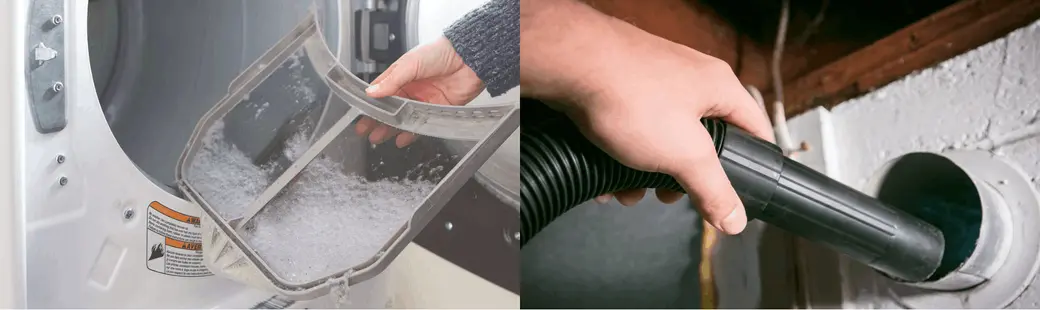
A screen blocked by lint increases drying time. After each load, pull out the screen, peel the lint off by hand, and replace it. Takes ten seconds. If you use dryer sheets, the sheet itself makes a handy lint wiper on the way out.
Every six months or so, give the screen a deeper clean. Wash the lint filter in the sink with water and mild dish soap, and let it air dry completely before reinserting it. While it's drying, vacuum out the lint trap housing (the slot the screen slides into) as lint collects in there too. This matters because residue from fabric softener and dryer sheets clogs the mesh in ways you can't always see, and it slows down airflow just as much as visible lint does.
The vent duct: at least once a year
This is the part most people skip entirely. The vent duct runs from the back of your dryer to an exterior wall or roof, and lint builds up along the whole length of it.
Signs of a clogged vent: clothes not drying fully, longer drying cycle times, the exterior of the dryer feels hot to the touch, musty odors, or excessive lint buildup on the lint screen. If you notice any of these issues, clean the vent immediately.
To do it yourself: unplug the dryer first. If you have a gas dryer, turn off the gas supply valve before you do anything else. Pull the dryer away from the wall, unscrew or unclamp the vent pipe from the back (you may need a screwdriver), and use a dryer vent cleaning brush (a long flexible brush sold at hardware stores) to clear lint from the duct. Follow with a vacuum hose to get what the brush loosens.
Then go outside and do the same from the exterior vent opening: open the cover, remove any lint you can reach by hand, and run the brush in from that side too. Check the area around the exterior opening to make sure plantings haven't grown around it and that nothing else is obstructing airflow. If the exterior vent is on the roof or otherwise hard to access safely, this is a reasonable job to hand off to a pro.
When you reconnect everything, make sure the clamp is secure, plug the dryer back in, and run it empty for about ten minutes to clear out any remaining dust.
The drum
Fabric softener and dryer sheets leave a filmy residue on the drum over time. Mix equal parts vinegar and water in a spray bottle, spray the inside of the drum, and wipe it down with a soft cloth, including the inside of the door. For heavier residue on an electric dryer, a cloth with warm water and dish soap works well. For gas dryers, use a liquid, nonflammable cleaner instead. Run a load of clean towels afterward to finish drying the interior.
One note on cleaning products generally: avoid harsh cleansers. They can damage the appliance and leave residue that transfers to future laundry loads..
The exterior
Spray the outside of the dryer with a solution of equal parts water and vinegar, then use a microfiber cloth to wipe away residue from the surface, knobs, and buttons.
How often is often enough?
Lint screen: after every load. Deep clean of the lint screen: every six months. Vent duct: at minimum once a year; more often if the dryer runs heavily or you're washing a lot of pet bedding and terry cloth. These materials shed more lint than typical laundry; hanging them to dry instead of using the dryer reduces the amount of lint entering the system.
If your vent run is long, has multiple turns, or you've never cleaned it, it's worth having a professional do it at least once so you know what you're working with. After that, annual DIY cleaning is manageable for most people.
Categories
- All Blogs (60)
- Buying Real Estate (9)
- Cleaning (11)
- Design & Decor (8)
- Events (10)
- Food (2)
- Garden (6)
- Home Improvement (6)
- Insurance (2)
- Maintenance/Repairs (13)
- Miscellaneous (10)
- Money (13)
- Newsletter (25)
- Organizing/Decluterring (11)
- Outdoors (11)
- Safety (8)
- Selling Real Estate (6)
- Taxes (3)
- Travel (7)
- Utilities (7)
- Weather/Environment (6)
Recent Posts

License Plate Cameras and What Buyers Should Ask

Spotlight: Loch Raven Reservoir

Two New Speed Cameras in Lutherville-Timonium

New Year, New You? | Need Your Input | Adopt a Pixel in the Universe
How to Get Your Garage Back

What You Need to Dump Now | Timing the Market | Art Show on 8/29

Estate of Mind

Clean these things when it's hot out | A new strategy for creating generational wealth | Summer fun

Pro Cleaning Tips to Keep Your Car's Interior Spotless
GET MORE INFORMATION

Jen Ward
Agent License ID: 625305